How Chemicals Affect Nail Strength: Causes & Care
Quick Answer
Chemicals can affect nail strength by drying the nail plate, irritating surrounding skin, or contributing to damage during manicure application and removal. Frequent solvents, household cleaners, and some nail hardeners may leave nails brittle or peeling. Protect your hands with gloves, remove polish gently, moisturize after washing, and allow damaged nail to grow out.
Your nails might look flawless after a manicure yet feel bendy, flaky, or painfully thin once the color comes off. The surprise is that the coating is not always the biggest problem; repeated exposure and removal habits often matter more. Here’s how chemicals affect nail strength, which ingredients deserve extra care, and how you can keep enjoying beautiful nails without unnecessary damage.


What Happens to Your Nails When Chemicals Touch Them?
Your visible nail plate is made mainly of compact layers of keratin. It has no living cells to heal an existing crack, so damage near the tip stays there until you trim it away or it grows out. Healthy nails are firm but slightly flexible. When they become too dry, over-filed, or repeatedly stressed, those layers can separate and their edges catch on everyday objects.
Different chemicals affect nails in different ways. A solvent can dissolve nail polish while also drying the nail and nearby skin. Cleaning products can irritate skin around the nails, especially with repeated wet work. Some strengthening formulas change how stiff the nail feels; more stiffness is not always better because an overly rigid nail may snap instead of flexing.
There is also a difference between chemical exposure and mechanical damage. Scraping away gel, drilling too aggressively, or peeling off an enhancement can remove layers of natural nail. You may blame the gel formula when the removal technique actually caused much of the thinning.
If your nails are already splitting, look at the broader causes in this guide to what causes weak nails before buying another treatment.
Which Chemicals Are Most Likely to Weaken Your Nails?
1. Acetone and Other Nail Polish Remover Solvents
Acetone works because it dissolves many nail-polish coatings quickly. Unfortunately, it can also leave the nail surface and nearby skin looking white, dry, or tight. Frequent remover exposure may contribute to brittle nails, especially when you combine it with vigorous rubbing and back-to-back manicures.
Acetone-free removers are not automatically harmless. They often rely on other solvents, such as ethyl acetate, and may still irritate sensitive skin. For a compatible soak-off gel, acetone may be the appropriate choice because forcing the coating off can cause worse damage.
If you’re unsure what your bottle contains, this explanation of the difference between acetone and regular nail polish remover will help you check the label.
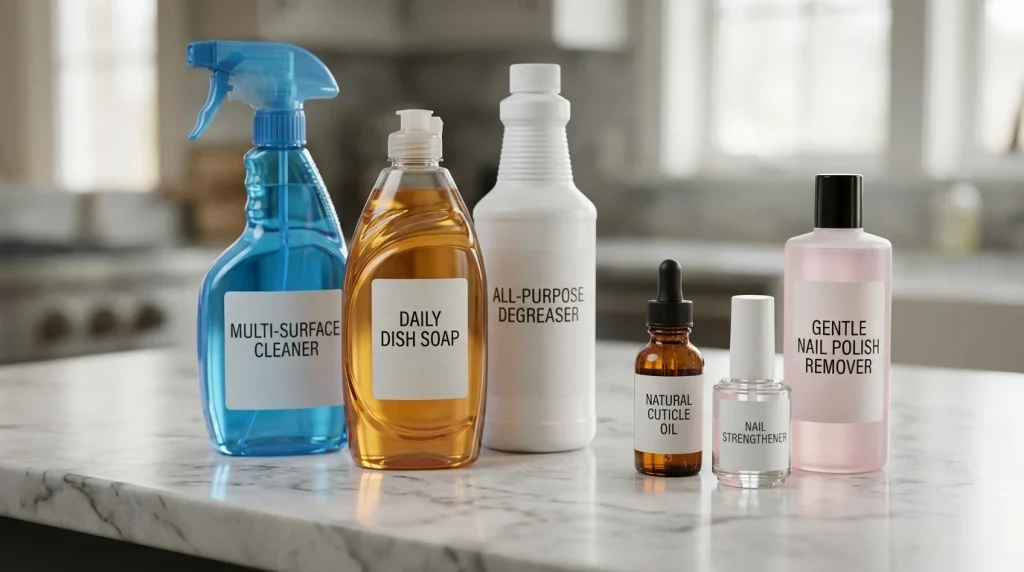
2. Detergents, Cleaning Sprays, and Bleach Solutions
Dish soap, laundry products, and household cleaners do not have to dissolve the nail itself to create problems. Repeated washing and exposure to cleaning agents can strip moisture from your skin and irritate the nail folds. Long periods of wet work also repeatedly soak and dry your nails, making peeling and splitting more likely.
Follow dilution and safety instructions, avoid direct skin contact, and never mix bleach with ammonia, acids, or other cleaners. Gloves are a better solution than hoping a quick rinse will prevent irritation.
3. Gel Polish, Acrylic Liquids, and Nail Adhesives
Gel and acrylic systems contain ingredients designed to form durable coatings. Correctly applied and fully cured products can create attractive manicures, but uncured gel and certain methacrylate ingredients can cause allergic contact dermatitis in susceptible people.
Application and removal are equally important. Excessive filing before acrylic application, peeling off gel, and digging under stubborn product can thin the nail plate. If you’re getting repeated enhancements, ask your technician to keep uncured product off your skin and avoid unnecessary filing of the natural nail.
4. Formaldehyde-Containing Nail Hardeners
Some hardeners contain formaldehyde, sometimes listed as formalin or methylene glycol. The ingredient can increase nail hardness by interacting with keratin. However, frequent use may make nails brittle and more likely to peel or break. It can also cause irritation or allergic reactions.
Check the label, follow the product’s schedule, and stop using any treatment that causes burning, itching, or worsening splitting. A flexible protective coating may suit your nails better than repeatedly applying a very stiff hardener.
5. Strong Primers and Cuticle Removers
Some professional nail primers use acidic ingredients to improve product adhesion. They are not everyday cuticle-care products and may injure skin if mishandled. Chemical cuticle removers are also formulated to break down or soften tissue, so leaving them on longer than directed can irritate the delicate nail folds.
Your cuticle helps seal the space between the nail and skin. Cutting it deeply or aggressively pushing it back makes that area more vulnerable to inflammation and infection.
Warning
Use nail solvents in a ventilated area and away from flames, candles, and hot styling tools. Never mix household cleaners. If a nail product causes a rash, blistering, persistent pain, or swelling, stop using it and seek medical advice rather than covering the reaction with another manicure.
Is Nail Polish Itself Harmful, or Is Removal the Bigger Problem?
Regular nail polish is not automatically bad for healthy nails. Once dry, it forms a decorative film.
Gel manicures add extra considerations. They require proper curing, careful removal, and usually more handling of the natural nail than basic lacquer. Their curing lamps also expose skin to ultraviolet light, so dermatologists recommend hand protection such as broad-spectrum SPF 30 or higher sunscreen or suitable UV-protective gloves.
If your natural nails are healthy, you may not need to abandon every manicure. Try reducing how often you remove and reapply product. If they already bend or peel, a simpler lacquer routine—or a period without enhancements—can reduce the amount of filing and removal they undergo.
What Are the Signs of Chemical-Related Nail Damage?
One symptom rarely proves that a chemical is responsible, but a pattern that begins after a new remover, cleaner, or salon treatment is a useful clue. Pay attention to changes in both the nail plate and surrounding skin.
- Peeling at the tips: Thin nail layers separate, often after repeated wet work, picking, or removal friction.
- Cracks and frequent breaks: The nail loses useful flexibility or has been physically thinned.
- Rough, chalky-looking surfaces: Dryness, residue, or superficial damage may appear after remover use.
- Itchy or swollen nail folds: Irritation or contact allergy may be involved, particularly after gel or acrylic products.
- Nail lifting, pain, or persistent discoloration: These can have several causes, including infection or an underlying nail disorder, and deserve professional assessment.
If you change several products at once, it becomes harder to identify the trigger.
How Can You Protect Nail Strength Without Giving Up Manicures?
You don’t need a shelf full of expensive treatments; a few repeatable habits can do more for your nails than one dramatic rescue product.
Protect Your Hands Before You Start Cleaning
Wear water-resistant household gloves for dishes, bathroom cleaning, and tasks involving detergents or disinfectants. Dry your hands afterward and apply moisturizer. This reduces repeated contact with water and potentially irritating cleaners.
Match Your Remover to Your Manicure
For regular polish, use a suitable remover with a cotton pad, hold it briefly against the surface, and wipe rather than scrubbing back and forth. If an acetone-free formula removes your lacquer easily, it can be a comfortable option.
For soak-off gel, follow the brand’s instructions or visit a qualified nail technician. Never pry off stubborn coating. Some hard gels are not soak-off products and need professional removal.
Replace Lost Comfort With Moisturizer
After washing your hands or removing polish, apply a fragrance-free hand cream over your nails and nail folds. A small amount of cuticle oil can help the area feel less dry and reduce rough skin that catches on clothing. Moisturizing improves comfort and appearance, but it does not glue separated nail layers back together.
A morning application and another before bed are realistic starting points. For a more complete routine, follow these daily nail-care habits for healthier nails.
Reduce Filing and Picking
Keep weak nails short enough that they do not snag, and smooth rough edges with a fine-grit file. Skip heavy buffing to make every ridge disappear; it removes nail material that cannot be replaced until new nail grows. Resist the temptation to peel lifting gel or acrylic, even when the coating seems almost detached.
At the salon, ask how products are removed, whether tools are cleaned properly, and whether the technician can avoid cutting your cuticles.
Pro Tip
Keep a small hand-cream tube where you remove polish and another near your kitchen sink. Pairing moisturizer with the task that dries your hands makes the protective habit easier to repeat.
What Should You Do If Your Nails Already Feel Thin or Brittle?
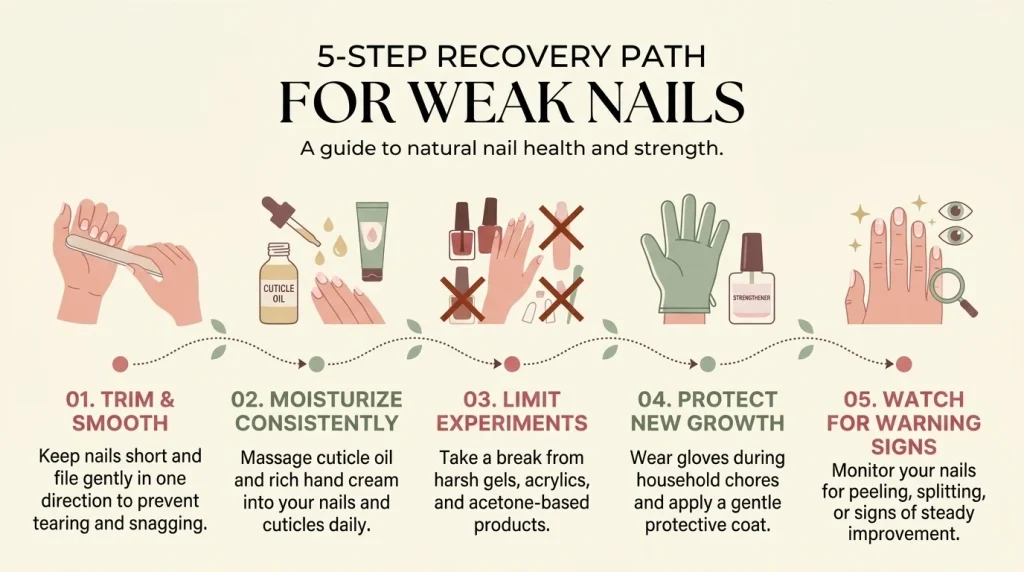
First, stop the most likely source of repeated damage. That might mean wearing gloves during chores, changing how you remove polish, or taking a break from gels and acrylics. A new hardener will not cancel out repeated scraping or chemical irritation.
- Trim and smooth: Shorten peeling nails carefully so loose layers are less likely to tear farther down.
- Moisturize consistently: Apply hand cream after washing and condition the nail folds daily to reduce dryness.
- Limit experiments: Avoid cycling through several hardeners, cuticle treatments, and DIY mixtures when your nails are irritated.
- Protect new growth: Wear gloves for wet work and avoid picking, biting, or using nails to open packaging.
- Watch for warning signs: Seek evaluation if pain, nail lifting, swelling, dark streaks, or persistent changes appear.
If your nails have been badly over-filed, focus on preventing further damage rather than expecting an instant repair. You can find a gentler long-term plan in this guide to repairing damaged, weak nails.
How Long Does Chemical-Related Nail Damage Take to Improve?
Dry-feeling skin around your nails may become more comfortable within days of reducing exposure and moisturizing. Visible splitting or thinning takes longer because the damaged nail plate does not heal like skin. It has to move outward as new nail grows.
Fingernails typically grow around 3 to 3.5 millimeters per month, with individual variation. Replacing an entire fingernail often takes approximately four to six months or longer, depending on nail length and the person. Improvement may be visible sooner if the underlying cause has stopped and a smoother section of nail begins growing from the base.
If weakness continues despite protecting your hands, the explanation may not be chemical exposure alone. Skin conditions, nail infections, certain illnesses, and other factors can affect nail appearance. A dermatologist can assess persistent problems and determine whether testing or treatment is needed.
What Should You Do—and Avoid—Around Nail Chemicals?
Do
- Wear gloves for wet work and cleaners.
- Use removal products as directed.
- Moisturize after washing and manicures.
- Keep your natural nail plate intact.
Don’t
- Mix bleach with other cleaners.
- Peel, pry, or scrape off gel polish.
- Overuse very stiff nail hardeners.
- Ignore itching, swelling, or pain.
Which Nail-Care Products Are Actually Worth Having?
Choose products that solve a specific exposure problem. You do not need a different bottle for every nail concern, and no cosmetic product can instantly rebuild nail layers that have already split. The following practical basics are more useful than an aggressive treatment routine.
Recommended Product
Water-Resistant Household Cleaning Gloves
A reusable pair creates a physical barrier between your hands and detergents, reducing the wet work that can aggravate brittle nails and dry skin.
As an Amazon Associate, we earn from qualifying purchases.
- For ordinary polish: An acetone-free nail polish remover may feel less drying for some people, provided it removes the lacquer without prolonged rubbing.
- For dry nail folds: A jojoba cuticle oil is a convenient way to condition the skin around your nails after handwashing or before bed.
- For everyday hand care: A fragrance-free hand cream can be useful when cleaning and frequent washing leave your hands tight or irritated.
Read ingredient lists if you have allergies, and avoid products that have previously caused a reaction. A simple moisturizer you actually use is more valuable than a complicated kit left untouched.
What Small Changes Make the Biggest Difference?
Keep polish changes intentional. If your manicure still looks good, there is no nail-health benefit to removing it simply because a new color is trending. Fewer unnecessary removal sessions mean less solvent contact and rubbing.
Protect the skin, not just the polish. Cuticles and nail folds help shield the area where your nail grows. When that skin becomes inflamed, the issue is more than cosmetic, so avoid deliberately getting uncured gel, adhesives, or harsh removers on it.
Notice your own triggers. If splitting worsens after cleaning day or irritation starts after one particular gel system, write it down. That pattern helps you make targeted changes rather than assuming every product in your routine is harmful.
Frequently Asked Questions About Chemicals and Nail Strength
Q: Does acetone permanently weaken your nails?
A: A single careful removal does not automatically cause permanent damage. Repeated exposure can contribute to dryness and brittleness, while peeling and scraping during removal may thin the nail. Damaged portions must grow out.
Q: Can cleaning products make fingernails brittle?
A: Yes. Frequent wet work and contact with detergents can contribute to dry skin and nails that split or peel. Wear suitable household gloves, dry your hands, and moisturize afterward.
Q: Are acetone-free removers always safer for weak nails?
A: No. They use alternative solvents that can still irritate skin, and some require more rubbing. Choose the remover that works for your polish and follow the recommended removal method.
Q: Can gel nail products cause an allergic reaction?
A: Yes. Certain methacrylate ingredients can trigger contact allergy, especially when uncured product touches skin. Stop using the suspected product if itching, swelling, or blisters develop and seek professional advice.
Q: Can a nail hardener repair chemically damaged nails?
A: It may provide temporary support or stiffness, but it cannot restore lost nail layers. Some formaldehyde-containing hardeners can increase brittleness with repeated use. Protecting new growth and reducing damage are more important.
Final Thoughts: Strong Nails Need Protection, Not More Chemicals
Understanding how chemicals affect nail strength helps you choose smarter habits instead of blaming every bottle on your vanity. Limit unnecessary exposure, use gentle removal techniques, and protect new growth while damaged tips grow out. Save this guide on Pinterest for your next manicure or cleaning-day nail-care reminder.

Hi, I’m Jessica, the creator behind Unique Lash & Nails Katy.
I created this website for anyone who loves beautiful nails as much as I do. Here, I share trendy nail designs, seasonal manicure ideas, easy nail care tips, honest product recommendations, and step-by-step guides to help you create salon-worthy nails at home. Whether you’re looking for everyday inspiration or your next favorite nail trend, I hope you’ll find something you love.